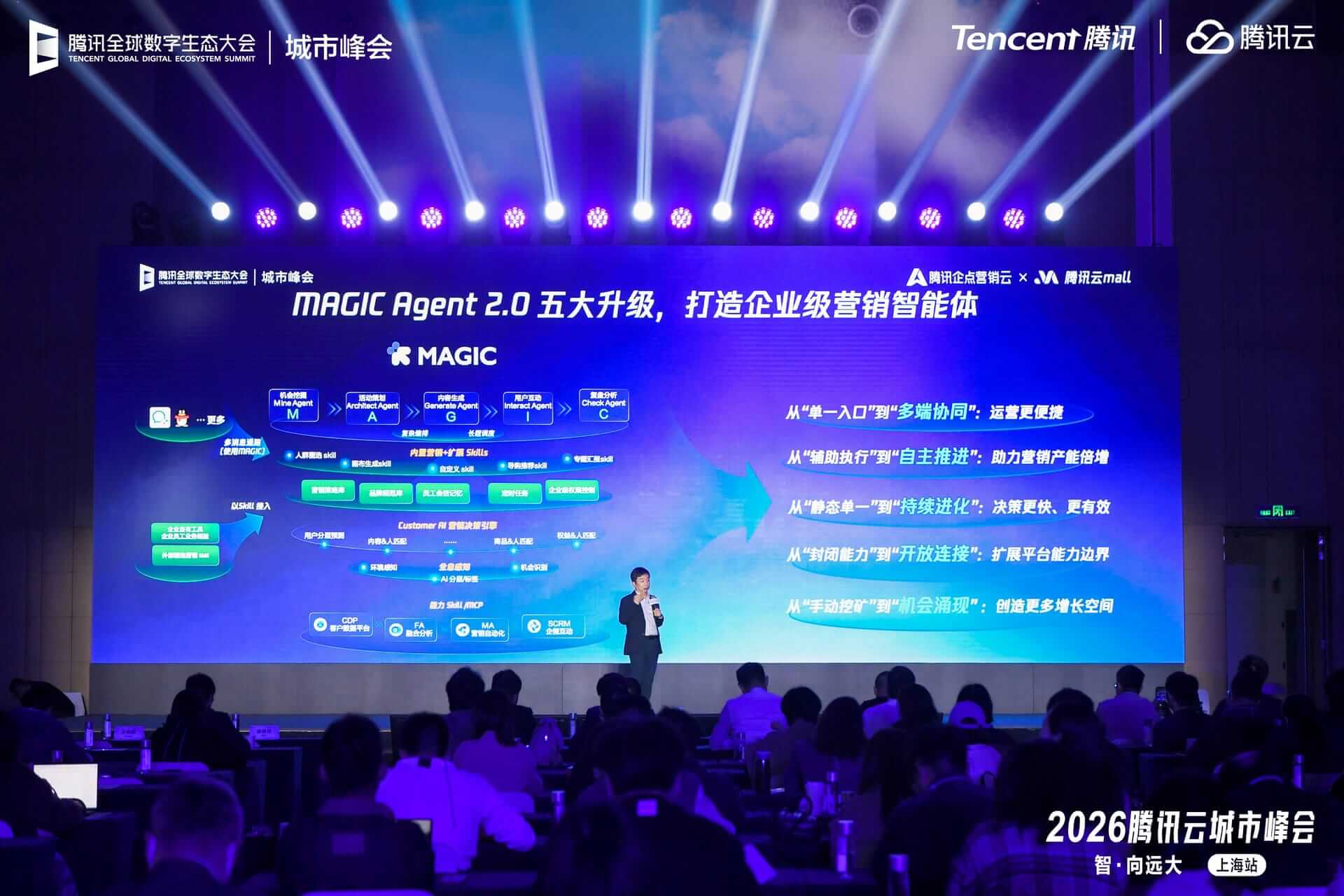
On June 5, the Tencent Cloud AI Industry Applications Summit · AI Marketing & Transactions was officially held. At the summit, Tencent upgraded and launched its two core products, MAGIC AI and Tencent Cloud Commercial Solution 2.0, and simultaneously unveiled the integrated marketing and transaction solution.
Taking “Agent collaboration” as the underlying architecture, the two products target the two core scenarios of marketing and transactions, shifting enterprises’ operations mode from “people configuring systems” to “Agent orchestrating systems”. The integrated solution uses a shared data foundation to connect public-channel customer acquisition with private-channel operations, as well as marketing conversion with transaction and repurchase, helping enterprises build an omnichannel, intelligent, and end-to-end growth loop.
Agents are penetrating frontline business operations at an unprecedented pace. Over the past year, the adoption of AI agents in enterprise scenarios grew eightfold. However, behind this surge, enterprises still face real obstacles to realizing AI’s value, including a shortage of professional AI operations talent, unclear paths to large-scale deployment, and data silos across business systems.
To address these industry-wide challenges, Tencent Cloud offers a new “AI-native” solution. Unlike traditional applications, where AI only played an assistive role in individual steps, an AI-native architecture no longer cobbles systems around human operational workflows, but reconstructs business workflows based on the autonomous organizing capabilities of agents.
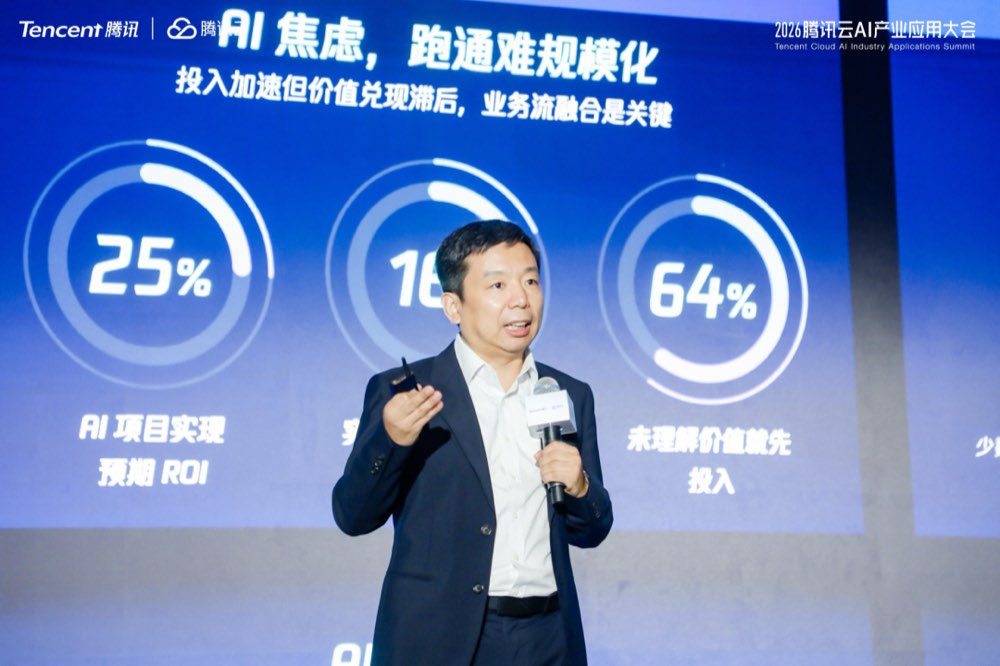
Li Xuechao, Vice President of Tencent Cloud and Tencent's marketing and transaction product owner, said: “The shift from ‘workflow + AI’ to ‘AI-native architecture’ is the most profound paradigm shift in enterprise services. The product form centered on AI-agent-orchestrated systems will become a decisive force driving enterprise-wide growth and digital transformation.”
MAGIC AI Marketing Harness: Enabling Agents to Truly Know Customers, Understand Business Needs, and Execute Tasks
In the marketing scenario, Tencent officially launched MAGIC AI. Unlike traditional marketing systems that rely on manual configuration, operations teams only need to define their business objectives, and MAGIC AI can autonomously complete the entire marketing workflow, including insight generation, operations, decision-making, execution, and performance review, evolving systematically from a collection of marketing tools into an intelligent marketing platform.
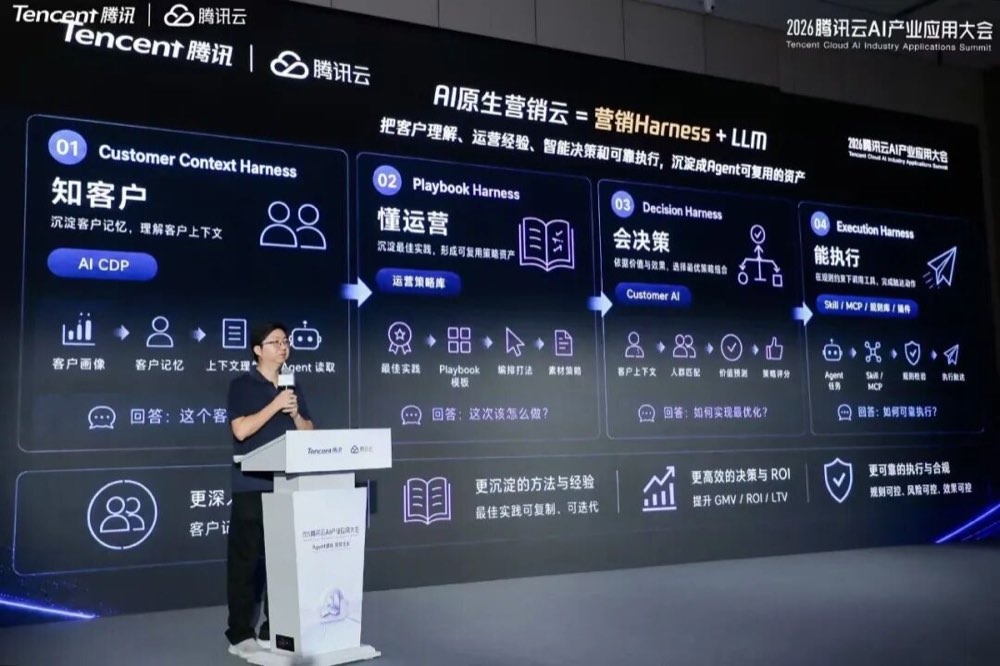
This capability is powered by the underlying Marketing Harness framework, which is first proposed by Tencent Marketing Cloud. Through four closely coordinated capability modules, it effectively bridges the application gap between large models and real enterprise marketing scenarios—
- Customer Context Harness: Leveraging AI CDP to consolidate customer memory and profiles, it answers the fundamental question, “Who is this customer?”
- Playbook Harness: It converts a brand’s best practices into reusable strategic templates, enabling agents to understand “what to do and how to do it”.
- Decision Harness: Using the Customer AI model for audience segment and strategy scoring, it answers the decision-making question of “how can we optimize the outcome”.
- Execution Harness: Through Skill/MCP and rules libraries, it orchestrates underlying systems to complete full-linkage customer reach within compliance constraints, ensuring reliable and controllable execution.
These four modules connect head-to-tail and build on one another layer by layer, transforming customer understanding, operational experience, intelligent decision-making, and reliable execution into reusable assets that agents can apply.
Zeng Wei, General Manager of Tencent Marketing Cloud’s Product R&D Division, pointed out: "MAGIC AI is not about giving marketing one more tool, but about helping enterprises obtain a growth system that can continuously learn, continuously reuse proven approaches, and continuously optimize." He suggested that enterprises can first choose a scenario capable of forming a closed loop, such as shopping guide recommendations, member repurchase, or new product marketing, and, after the workflow has been validated, it can be replicated across more growth scenarios.
Tencent Cloud Commercial Solution 2.0: From a Transaction Foundation Handling Hundreds of Billions of CNY to Intelligent Business Operations
As traffic acquisition costs keep rising, AI enters core business flows, and omnichannel closed-loop operations become the key to growth. Enterprise operations are reaching a new turning point—building this solution is only the beginning; enabling the business to run autonomously is the ultimate goal.
As Tencent’s core platform for enabling omnichannel transactions, Tencent Cloud Commercial Solution welcomes its brand-new 2.0 version. Driven by the “two wheels” of “a transaction foundation handling hundreds of billions of CNY and an agent capability system”, it makes a fundamental shift from “supporting transactions” to “intelligent business operations”.
On the one hand, Tencent Cloud Commercial Solution 2.0 continues to strengthen its transaction foundation capability proven by hundreds of billions of CNY in GMV; on the other hand, it has built an “AI operations team” composed of eight agents. One business operations analysis agent serves as the central brain, responsible for global diagnosis, opportunity discovery, and trend prediction. Seven execution agents cover core scenarios such as products, marketing, content, members, distribution, stores, and AI shopping assistants. These agents automate the full operations process of “discovering issues → generating plans → executing plans → returning results”.
Relying on Tencent’s exclusive ecosystem capabilities, such as Tencent Ads, channels, official accounts, WeCom, and WeChat Pay, Tencent Cloud Commercial Solution 2.0, linked with Tencent Marketing Cloud, will further connect the entire end-to-end business loop from public-channel customer acquisition and private-channel customer retention to transaction conversion and repurchase operations.
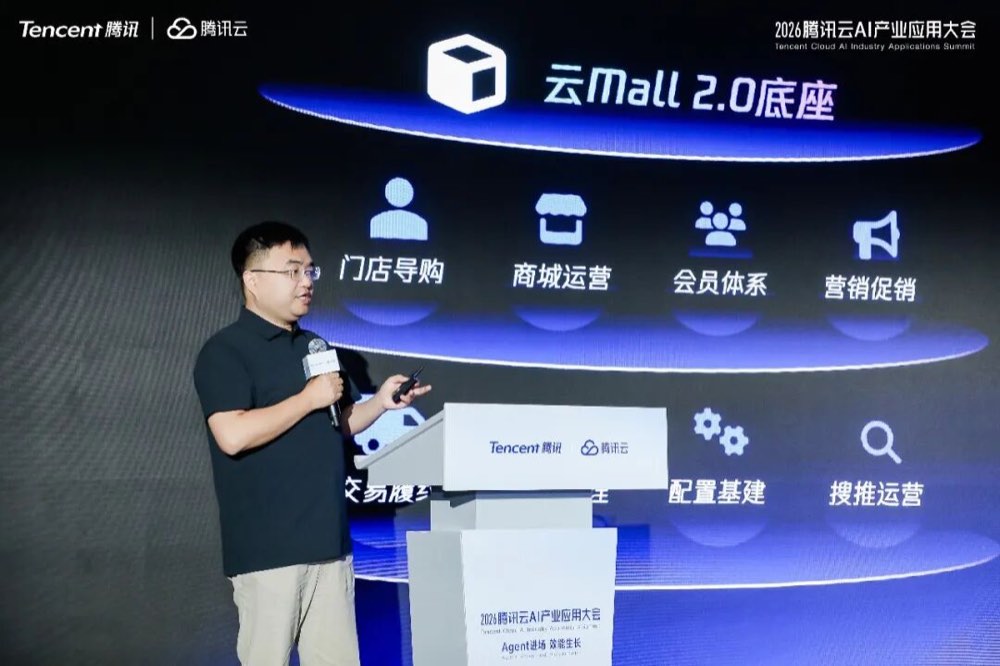
Qin Jiang, product lead for Tencent Cloud Commercial Solution, said: “Previously, Tencent Cloud Commercial Solution had already built up extensive expertise across five major industry scenarios—retail, commercial real estate, cultural tourism, healthcare, and global expansion. The relevant industry experience has been incorporated into the agents’ initial strategies, helping enterprises quickly build mature operational capabilities.”
Integrated Marketing and Transaction Solution Unveiled: Helping Industries Build an Omnichannel End-to-end Growth Loop
At the industry practice level, AI-native marketing and transaction capabilities have already achieved scaled deployment across multiple fields.
Xu Ke, Deputy General Manager of DeRUCCI Group, shared that, in the past, the bedding industry’s “high average order values, complex decision-making, and reduced reliance on operations” operating mode led to a low conversion rate of sales leads, while the underlying reasons remained unclear. To address this challenge, DeRUCCI Mattress partnered with Tencent Marketing Cloud to map out a full customer lifecycle operations roadmap. By leveraging Customer Data Platform(CDP), Marketing Automation(MA), Social Customer Relationship Management(SCRM), MAGIC AI, and other capabilities, the company integrated customer data, connected with 18,000+ potential customers in three months, and achieved a customer retention rate as high as 99%, significantly improving conversion efficiency and the average order value.
Ye Hui, CIO of Tianjin Pharmaceutical Da Ren Tang Group, said that Da Ren Tang partnered with Tencent Health and chain pharmacies to build a “Digital Canal” chronic disease management platform. The company also launched a pilot of the "Nourishment Plan" in the scenario of cardiovascular combination drug therapy. Relying on Tencent Marketing Cloud CDP and AI algorithms to accurately identify patient profiles and automatically generate personalized service content, and through using MAGIC AI to enhance in-store staff’s service capabilities, the number of identified target patients increased 100-fold and in-store staff’s task execution rate also rose from 25% to over 70% during the pilot period.
Furthermore, more leading enterprises from retail and consumption, cultural tourism, construction and real estate, healthcare, mobility, and many other industries have partnered with Tencent Cloud on carrying out innovative “AI + marketing and transactions” practices. According to the latest IDC report, in 2025 Tencent Marketing Cloud CDP continues to lead China’s customer data platform (CDP) market with the highest market share.
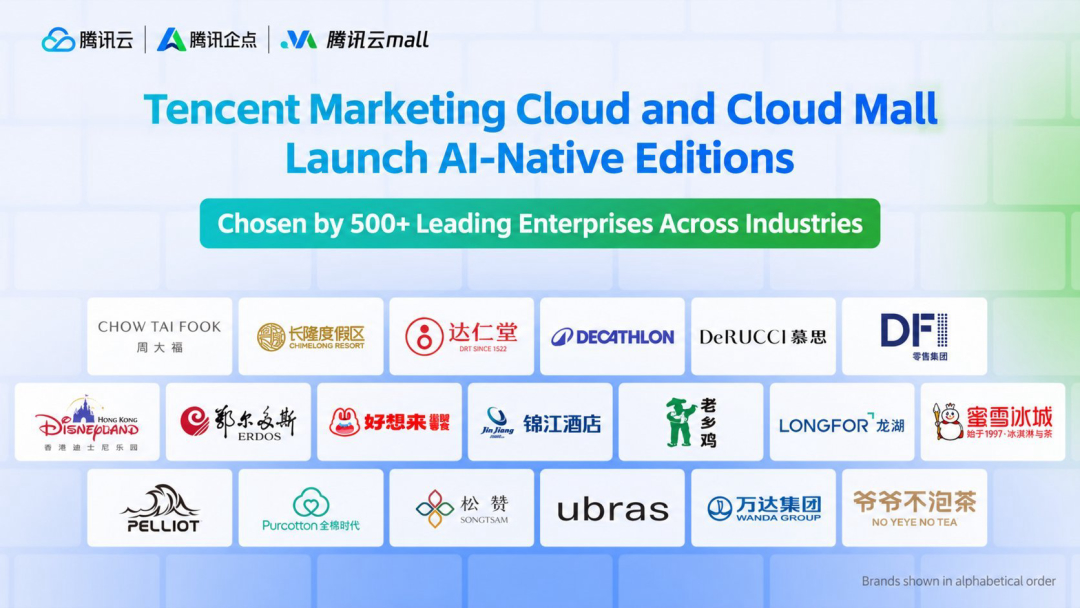
At the summit, Tencent Cloud released the integrated marketing and transaction solution. Through the deep integration of the two products’ data foundations, the solution enables coordinated circulation between marketing and transaction data, helping enterprises build a complete omnichannel growth flywheel across key scenarios such as product discovery, customer acquisition, member operations, transaction conversion, and repurchase growth.
Chen Fei, Senior Vice President of Tencent Cloud, said: “The real barrier to agent deployment is not the model, but business depth and the data foundation. We inject the operational know-how accumulated from our work with leading customers into our products, so that AI does not merely make recommendations, but can execute, close the loop, and deliver results. We look forward to further helping enterprises across all industries accelerate the omnichannel, integrated growth flywheel through the deep integration of marketing and transaction scenarios, together with the coordinated capabilities of Tencent Ads.”
From “workflow + AI” to “AI-native architecture”, marketing and transactions have entered an agent-driven era. As AI evolves from an assistive tool to a new engine of productivity, the boundaries of enterprise growth will be redefined.